
Performance, Interfaces & manubes Compatibility
Industrial edge devices compared
Industrial edge devices enable local data processing and connect shop floor systems to corporate IT. We show what an edge device needs to deliver and compare devices from well-known manufacturers.
Introduction
What is an edge device?
An edge device is a rugged, compact computer that processes data locally in production – at the machine, controller or sensor – and connects plants to higher-level IT and cloud systems. In the Industrial Internet of Things (IIoT), edge devices bridge the gap between machines and the cloud.
An industrial edge device is a compact computer system designed for operation on the shop floor.
This is achieved through a compact and rugged design, interfaces for integration into the production IT environment and, optionally, the ability to connect inputs and outputs and to program internal controllers.
An edge device enables data to be (pre-)processed locally, directly at the source (see also edge computing). It also often serves as an interface (edge gateway) between local production equipment and higher-level, often cloud-based systems.
An edge device and an edge node are not the same thing: The edge device is the hardware in the production network. The manubes Edge Node is the software that runs on the edge device and securely exchanges local data with the manubes cloud.
Distinction
Edge device, edge gateway and industrial PC compared
The three terms are often used interchangeably. They differ mainly in how much computing a device does itself and whether it runs its own applications. An edge gateway – also called an IoT gateway – mainly translates protocols and forwards data.
| Criterion | Edge gateway / IoT gateway | Edge device | Industrial PC (IPC) |
|---|---|---|---|
| Main task | Translating protocols and forwarding data from controllers and sensors | Capturing data at the source, pre-processing it and exchanging it with IT and cloud systems | Compute-intensive applications, visualization and operation at the machine |
| Computing power | Low to medium | Medium, designed for continuous operation in the control cabinet | Medium to high |
| Own applications | Usually only the manufacturer's functions; some gateways run Docker containers | Yes, e.g. as Docker containers | Yes, on Windows or Linux |
| Inputs and outputs | Rarely | Depending on the model: None, integrated or modular | Usually none, extendable via fieldbus |
| Examples from this comparison | IBH Link UA Quad Core | WAGO Edge Devices, Welotec EG500 Mk2, WAGO PFC 300 | Siemens IPC127E, Beckhoff C6015 |
| Role with manubes | Delivers data to the Edge Node via OPC UA; Docker-capable gateways can also run it themselves | Runs the manubes Edge Node | Runs the manubes Edge Node (Docker or Windows service) |
The boundaries are fluid: Many compact industrial PCs are used as edge devices, and powerful gateways run their own applications. For use with manubes, what matters most is whether the Edge Node can run on the device.
What does an edge device need to deliver?
An edge device works where production happens – in the control cabinet or directly at the machine. This results in five requirements:
Rugged and reliable
An edge device must withstand the harsh conditions of production and offer the highest possible reliability.
Sufficient computing power
The edge device must also provide the computing capacity required for the respective application so that it can reliably handle tasks that arise directly on the shop floor.
Connectivity to machines and the cloud
Connectivity to the machine level on the one hand and to cloud environments on the other must also be ensured. In practice, this means industrial protocols such as OPC UA towards the controllers and a secure internet connection to the cloud.
Security
An edge device connects the production network to corporate IT and must not become a gateway for attackers. Regular security updates, protection against unauthorized access and, wherever possible, outbound-only connections are essential. The manubes Edge Node establishes the connection to the cloud itself – no inbound connections into the production network are required (outbound communication).
Centrally manageable
Companies connecting several lines or sites operate many edge devices. Applications should therefore be deployed and updated centrally – for example as containers via Portainer.
Interface Support and manubes Compatibility
Which criteria do we apply?
Our manubes platform connects different production sites and local systems to a central cloud environment. For this purpose, manubes provides Edge Nodes – compact software applications that run locally and provide secure access points into production networks.
Using Docker technology, manubes Edge Nodes can be installed, operated and managed on a wide range of edge devices.
We apply the following criteria when selecting edge devices for use with manubes:
Docker capability
The container technology Docker brings the required applications onto the edge device – including manubes Edge Nodes, Kepware Edge (OPC server) or the Industry 4.0 middleware OPC Router.
On Linux-based edge devices, Docker capability is essential for use with manubes, as Edge Nodes are distributed there as Docker containers. On Windows devices, the Edge Node can alternatively be installed as a Windows service.
OPC UA
The OPC UA server function is an important criterion, as it provides a standardized connection to automation devices and their data.
The communication standard gives access to almost all shop floor devices. If there is no native OPC UA server function, third-party solutions such as Kepware Edge can be used.
manubes on edge devices
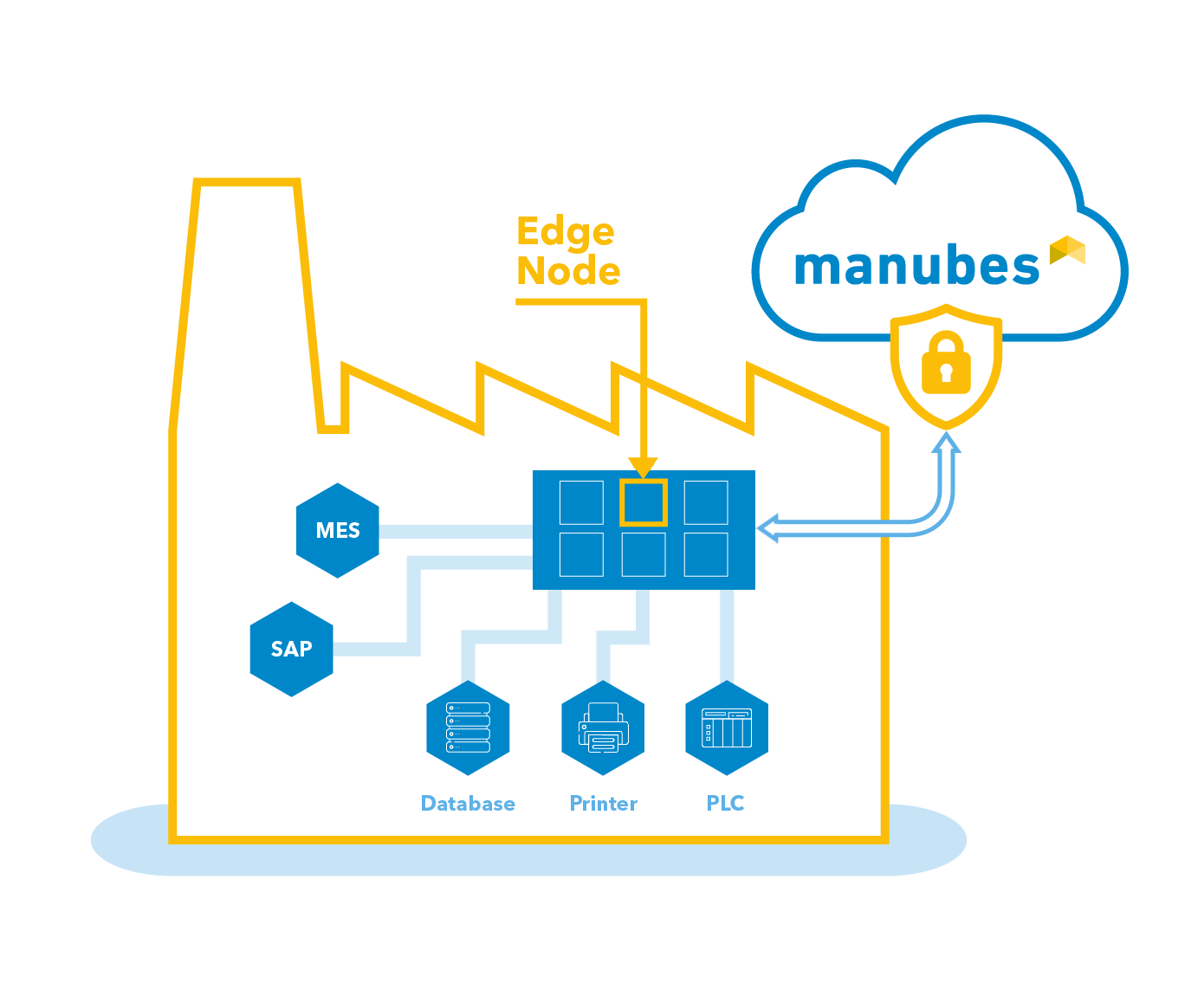
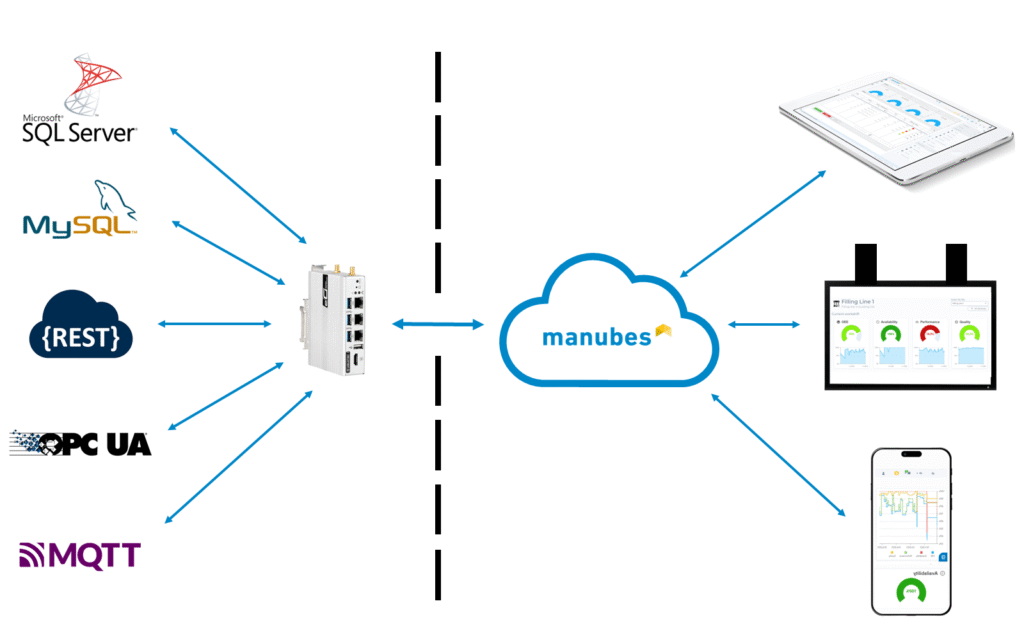
manubes provides a Docker container that can be run on edge devices. The manubes Edge Node handles data access to local resources (OPC UA, SQL, REST, etc.) and runs local workflows, so critical processes do not require a cloud connection.
Data can also be pre-processed before it is transferred to the cloud. Store & forward and redundancy are implemented automatically at this level.
In practice, this means the Edge Node filters and aggregates measured values and checks limit values in near real time directly in the plant – without the latency of a detour via the cloud. If the internet connection drops, it buffers the data and transmits it later. Several Edge Nodes form an Edge Cluster – if one Edge Node fails, another takes over its tasks.
Comparison
Suitable edge devices at a glance
We have surveyed the market and catalogued suitable edge devices here. The table summarizes the three most important criteria; the individual devices follow below.
| Device | Docker capability | Integrated OPC UA server | Inputs/outputs (I/O) |
|---|---|---|---|
| WAGO Edge Devices | Edge Computer: Debian Linux with Docker | Edge Computer: No (Edge Controller 400: OPC UA via ctrlX OS) | None |
| WAGO PFC 300 | Linux and Docker included | CODESYS OPC UA Server | Modular extension possible |
| WAGO Web Panel 400 | Linux system, Docker supported | No | None |
| Welotec EG500 Mk2 | Integrated container runtime with Docker Compose | No | None; 1 serial interface (RS-232 or RS-485) |
| Emerson PACSystems RXi Panel PCs | Yes (with PACEdge) | No | None |
| Siemens SIMATIC IOT2050 | Yes | No | No integrated I/O, extendable via the Arduino connector (e.g. SIMATIC I/O Shield) |
| Siemens IPC127E | Yes | No | None |
| Beckhoff C6015 ultra-compact industrial PC | Yes | Optional via TwinCAT 3 OPC UA Server | Not directly, extendable via EtherCAT |
| B&R X20 Edge | Yes | Yes | Yes, modular extension with X20 I/O modules |
| Phoenix Contact EPC 1522 | Yes (Portainer via the PLCnext Store) | For system variables | None |
| IBH Link UA Quad Core | Yes, in the Quad-Core 64-bit variant | Yes | No integrated I/Os |
Manufacturer information checked in October 2026. On Linux devices, Docker is required for the manubes Edge Node; if there is no integrated OPC UA server, Kepware Edge, for example, connects the controllers.
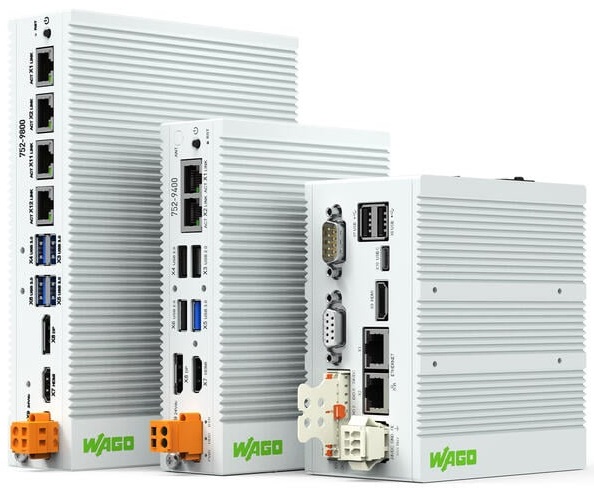
WAGO Edge Devices
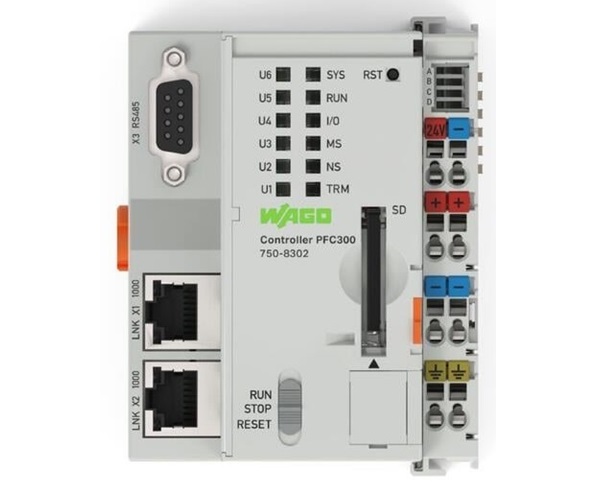
WAGO PFC 300
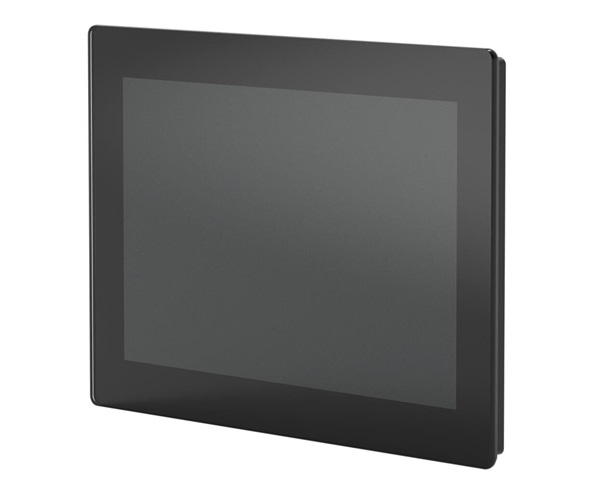
WAGO Web Panel 400
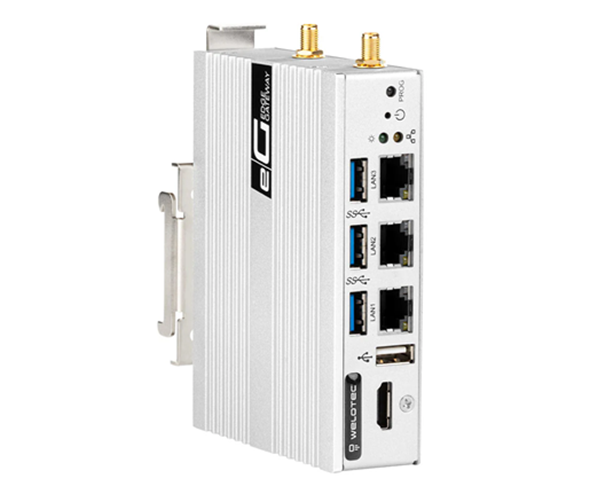
Welotec EG500 Mk2
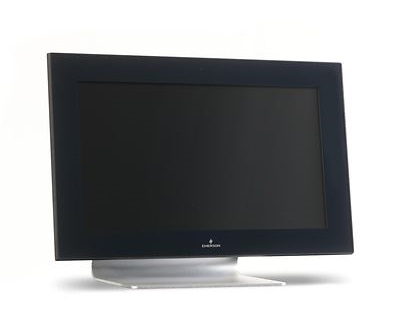
Emerson PACSystems RXi Panel PCs
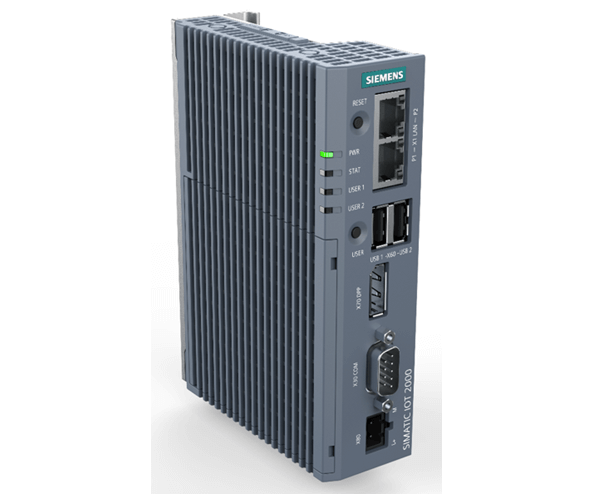
Siemens SIMATIC IOT2050
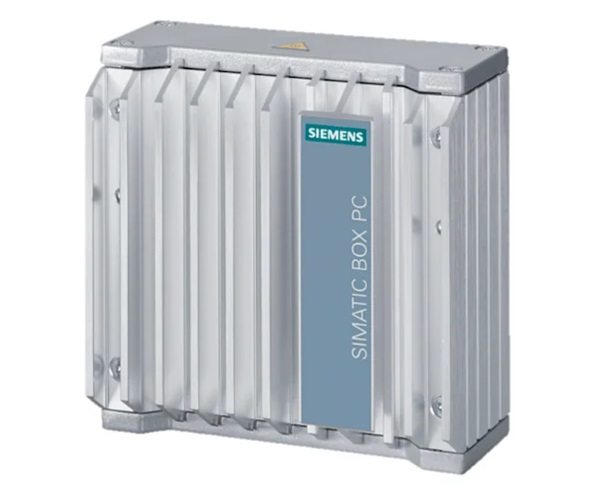
Siemens IPC127E
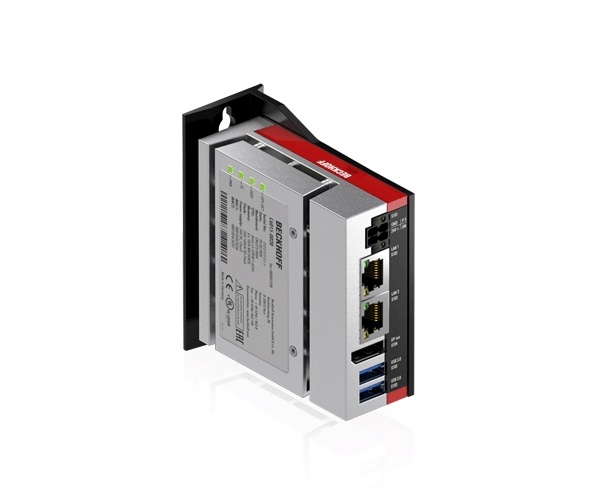
Beckhoff C6015 ultra-compact industrial PC
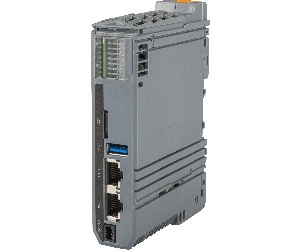
B&R X20 Edge
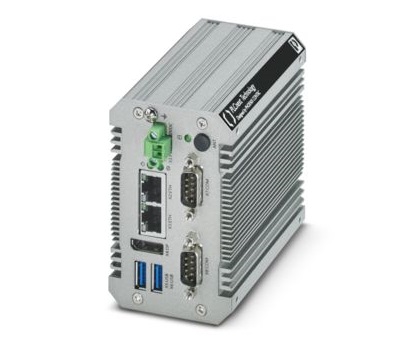
Phoenix Contact EPC 1522
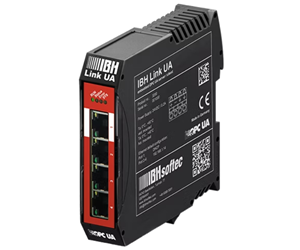
IBH Link UA Quad Core
Which edge device is right for your use case?
Five questions quickly narrow down the choice:
Does the manubes Edge Node run on the device?
On Linux devices, the Edge Node needs Docker; on Windows devices, it can also be installed as a Windows service. According to the manufacturers, all devices in this comparison support Docker – the Emerson PACSystems RXi with PACEdge, the IBH Link UA in its 64-bit variant.
How are the controllers connected?
If the device has an integrated OPC UA server, the connection to the controllers is standardized. If not, an OPC server such as Kepware Edge takes on this task on the same device. For legacy controllers such as Siemens S5/S7, a gateway such as the IBH Link UA Quad Core is a good fit.
Does the site need its own inputs and outputs?
If sensors and signals are to be connected directly to the device or a controller is to be programmed, edge devices with PLC functionality and modular I/O are the right choice, e.g. WAGO PFC 300 or B&R X20 Edge.
Will it be operated on site?
If employees need to view or enter data at the machine, edge devices with an operator panel are a good option, e.g. WAGO Web Panel 400 or Emerson PACSystems RXi. They display manubes pages directly at the workstation.
How much computing power does the application need?
Compact devices such as the Siemens SIMATIC IOT2050 are sufficient for capturing and forwarding individual machine data. For many data points, local analyses or Windows applications, an industrial PC such as the Siemens IPC127E is the better choice.
Contact us with any questions
Do you have questions about using specific edge devices with manubes? Our team will be happy to advise you on your use case, free of charge and without obligation.

Example with WAGO Edge Computer 752-940x
Machine connection via edge device: Step-by-step guide with manubes
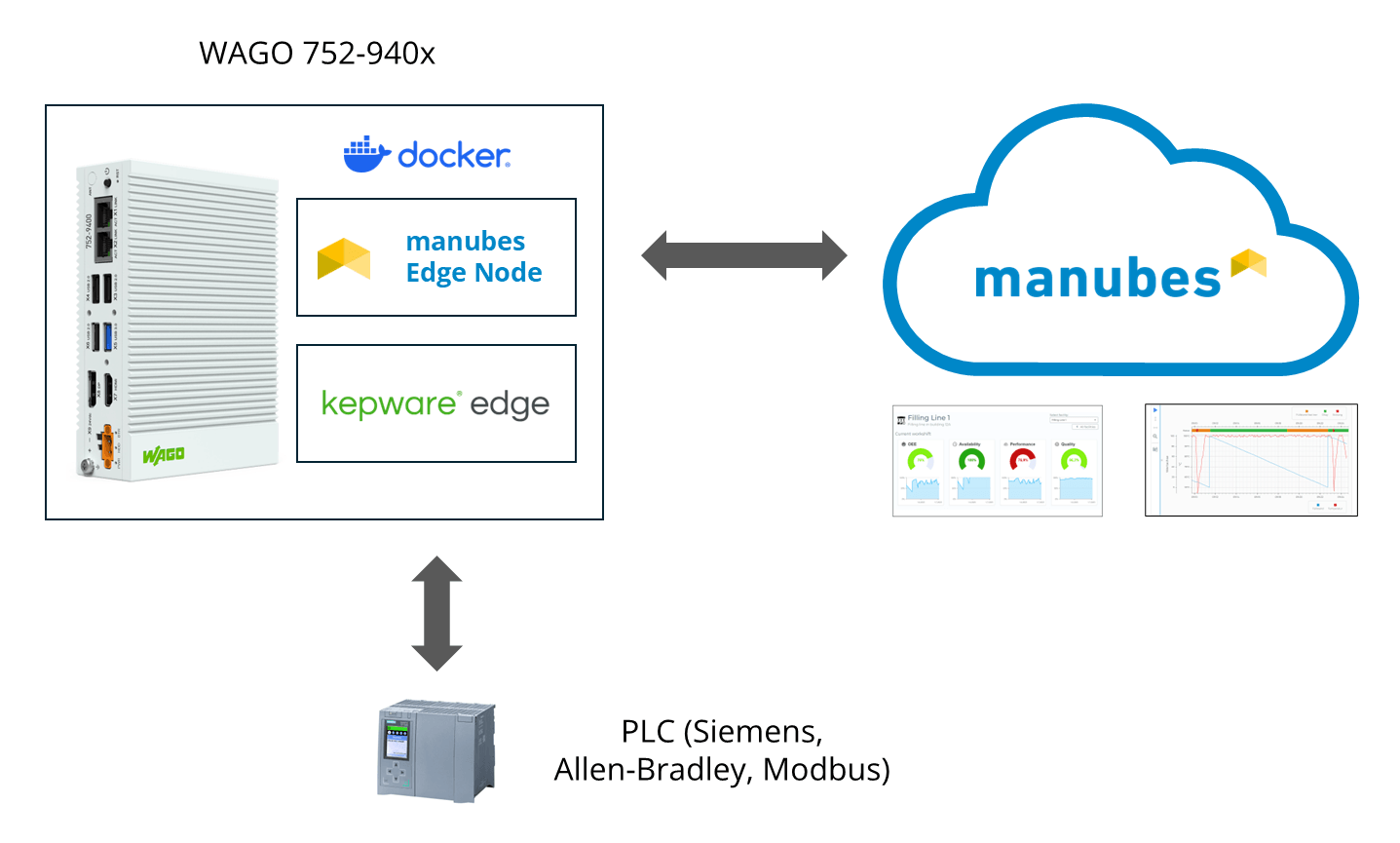
Our step-by-step guide shows how to install a manubes Edge Node on an edge device in your production network and connect it to a local OPC UA server.
A WAGO edge computer from the 752-940x series is used as the edge device.
Frequently asked questions about edge devices
What is an edge device?
An edge device is a rugged, compact computer that processes data directly in production – at the machine, controller or sensor. It captures data, pre-processes it on site and exchanges it with higher-level IT and cloud systems. Typical industrial edge devices are DIN-rail box PCs, controllers with Linux and Docker, and panel PCs with an operator display.
What are examples of edge devices?
In manufacturing, typical examples of edge devices are compact box PCs such as the Siemens SIMATIC IOT2050 or Phoenix Contact EPC 1522, controllers with Linux and Docker such as the WAGO PFC 300 or B&R X20 Edge, panel PCs such as the WAGO Web Panel 400 and gateways such as the IBH Link UA Quad Core. All of them process data close to the machine.
What is the difference between an edge device and an edge gateway?
An edge gateway – also called an IoT gateway – mainly translates protocols and forwards data from controllers and sensors. An edge device also processes data itself and runs its own applications, for example as Docker containers. The boundaries are fluid: Powerful gateways such as the IBH Link UA Quad Core can also run containers.
What is the difference between an edge device and an edge node?
An edge device is hardware, an edge node is software. The manubes Edge Node runs as a Docker container or Windows service on a device in the production network. It accesses local data sources such as OPC UA servers, SQL databases and REST interfaces and transfers the data securely to the manubes cloud. Several Edge Nodes can be combined into an Edge Cluster.
What requirements must an edge device meet for manubes?
On Linux-based edge devices, Docker must be available, as the manubes Edge Node runs there as a Docker container. On Windows devices, it can alternatively be installed as a Windows service. The device must also meet the minimum requirements of the Edge Node. An integrated OPC UA server is helpful but not mandatory: If there is none, an OPC server such as Kepware Edge connects the controllers.
Does an edge device with manubes also work without a cloud connection?
Yes, for critical processes. The manubes Edge Node runs local workflows directly on the edge device, so these processes do not need a cloud connection. If the connection drops, the Edge Node buffers the data (store & forward) and transmits it later. In an Edge Cluster, another Edge Node takes over if one fails.
Do I need a dedicated edge device for edge computing?
Not necessarily. The manubes Edge Node runs on almost any computer in the production network that supports Docker or runs Windows – provided it meets the minimum requirements of the Edge Node. An industrial edge device is worthwhile if the device is to run permanently in the control cabinet or directly at the machine. The basics are explained in What is edge computing?.
Product video: Get to know manubes
Further information
Try manubes for free
Test the different manubes features in your personal cloud environment.
Get started
