
Definition, Calculation and Optimization
Throughput Time in Manufacturing
Throughput time measures how long an order or product takes to pass through the entire production process. Manufacturers use the metric to assess production workflows, identify bottlenecks and improve their ability to deliver on time.
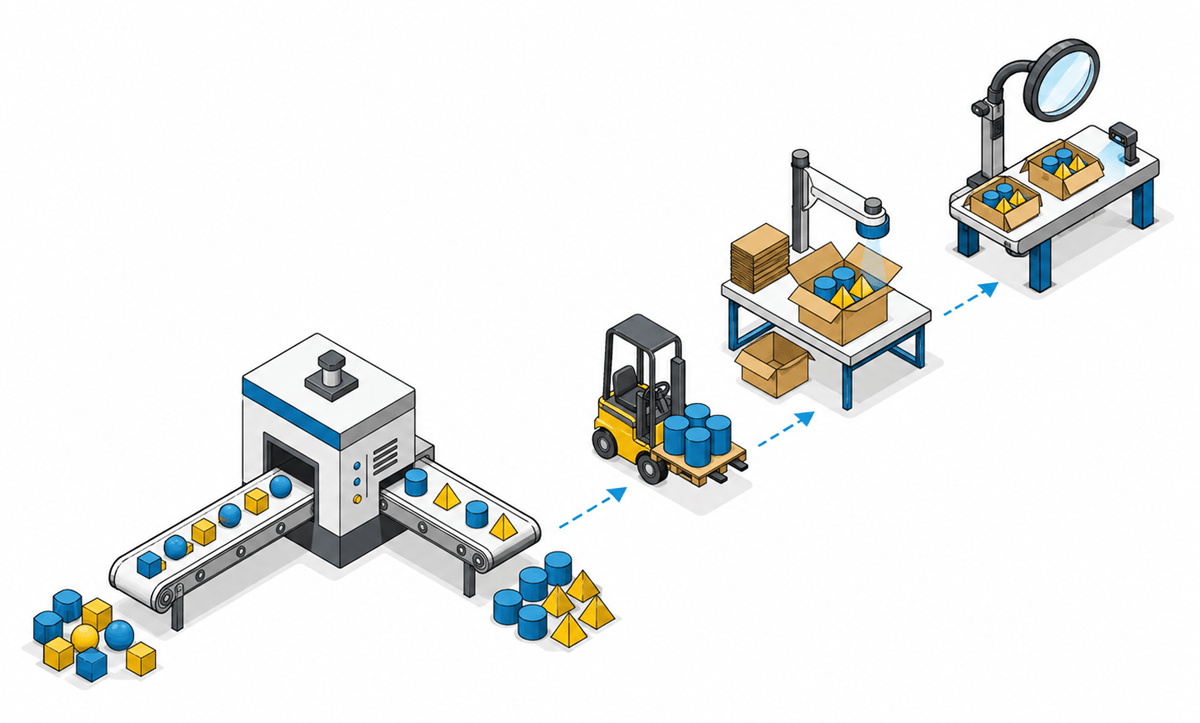
Throughput time refers to the total time an order, workpiece or product needs to pass through a defined process completely. In production, throughput time usually starts when a production order enters the manufacturing process and ends when the product is completed or made available.
Unlike pure processing time, throughput time includes all time periods that occur during the production process. In addition to value-adding processing time, it includes setup time, transport time, idle time, waiting time, approval time and quality inspection time. In many cases, these non-processing times account for the largest share of throughput time and therefore offer significant potential for optimization.
Depending on internal company standards and specific use cases, the period being measured by throughput time can vary. Some companies measure throughput time only within manufacturing, while others also include upstream processes such as order release or downstream steps such as packaging and shipping.
Interpreting throughput time
Long throughput times tie up capital in work-in-process inventory, make flexible production planning more difficult and increase the risk of delivery delays.
By contrast, short throughput times create the basis for faster response times, lower inventory levels and the short-term integration of customer orders or planning changes.
Data from machine controllers, MES and ERP systems not only shows how long an order takes to complete but also which steps are responsible for the biggest time losses. A detailed breakdown of throughput time identifies the causes of delays, such as missing material or long waiting times between operations, and therefore reveals weak points in production.
Throughput time is one of the most important metrics in production management since it covers a large part of the production process.
Calculation
How is throughput time calculated?
Throughput time is calculated based on the total time an order needs between the defined start and end point of a production process.
1. Basic Formula
Throughput time is calculated using a simple formula:
Throughput time = End time – Start time
Alternatively, the metric can be calculated by adding up the individual time components:
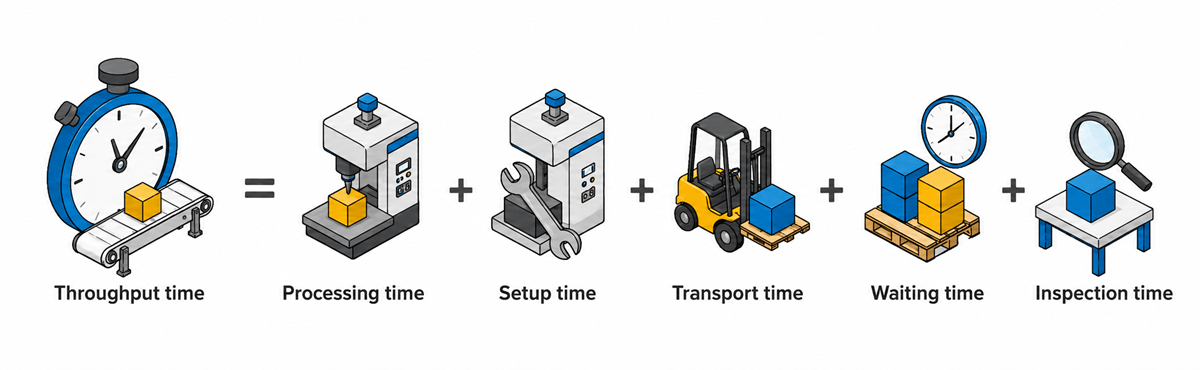
Throughput time = Processing time + setup time + transport time + idle time + inspection time + approval time + […]
Which time components are included depends on the company’s internal definition. The important point is that the scope is defined consistently for all orders when different production areas or time periods are compared.
2. Components of throughput time
Typical components of throughput time include the following:
Processing time:
Processing time includes all value-adding activities in which the workpiece is actually processed, such as milling, turning, welding, painting or assembly.
Setup time:
Before production can start, machine setup, tool changes are program loads might be required. Setup times are typically longer when several products or product variants are manufactured on the same machine or production line.
Transport time:
Transport times occur when materials or components are moved between two stations (e.g. via conveyor belts, forklifts or automated guided vehicles). Shorter transport routes reduce transport times and therefore shorten total throughput time.
Waiting time:
Waiting times occur when an order cannot be processed immediately. Typical causes include occupied machines, equipment failures, missing personnel, material shortages or the prioritization of other orders.
Queue time:
Queue times are periods in which workpieces are temporarily stored between two process steps. High work-in-process (WIP) inventory often causes orders to remain in production much longer than necessary.
Inspection and approval time:
Inspection and approval times include the time required for quality inspections, measurements or approvals that take place at different points in the manufacturing process.
Importance
Why are short throughput times important?
A short throughput time means that orders move quickly through production and finished products become available sooner. This makes production planning easier, leads to lower logistics costs and reduces the risk that orders stall due to disruptions or short-notice planning changes.
Meeting delivery dates
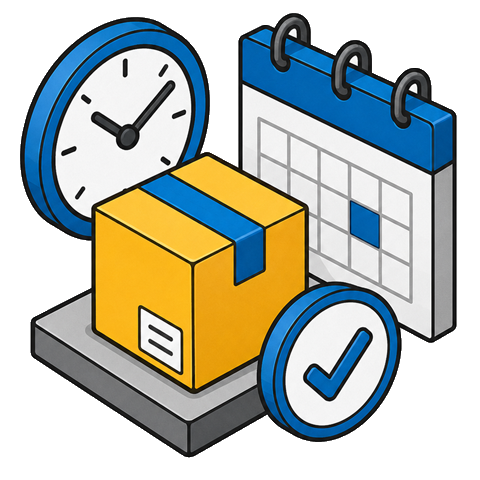
The shorter the throughput time of an order, the better its completion can be planned. Delays become visible earlier and there is more time to respond to machine downtime, material shortages or rush orders, leading to increased delivery reliability.
Reduction of work-in-process inventory
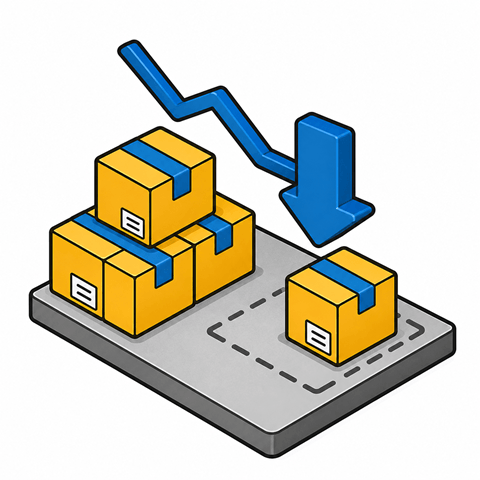
Workpieces waiting for the next processing step tie up capital and require storage space. A shorter throughput time ensures that fewer semi-finished products are in production at the same time.
Increased flexibility
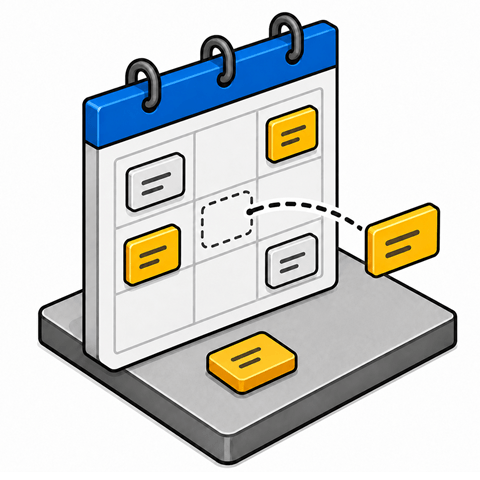
Customers might change delivery dates, adjust quantities or order additional variants at short notice. Companies with short throughput times can usually integrate these changes into their production planning more easily because fewer orders are tied up in production at the same time.
Faster identification of bottlenecks
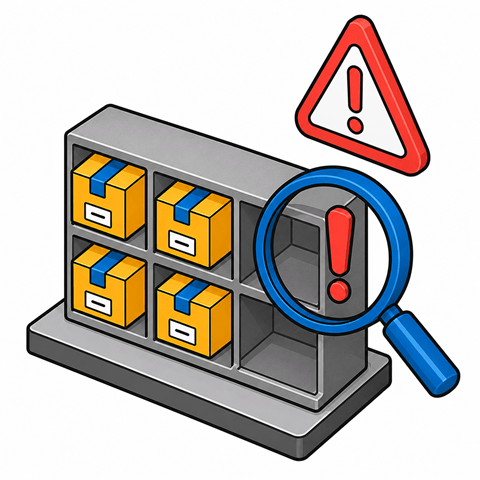
If the throughput time of individual products or production areas increases, this often indicates problems in the production workflow. For example, overloaded workstations, material shortages or frequent machine downtime can cause orders to build up in front of specific machines or production lines. Throughput time makes these problems visible at an early stage.
Lower production costs
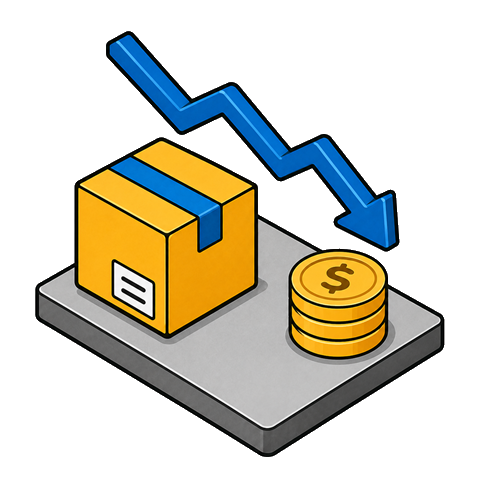
Long throughput times cause indirect costs. Workpieces need to be transported, stored and managed. The effort for planning increases when production orders are delayed or priorities need to be changed at short notice. A shorter throughput time usually means lower costs in these areas.
Basis for continuous improvement

Throughput time is well suited for making the success of optimization measures measurable, such as shorter setup times or eliminated bottlenecks. This makes throughput time an ideal metric for the continuous improvement process (CIP).
Obstacles
Which factors cause long throughput times?
In very few cases does a long throughput time result solely from slow processing operations. Organizational or logistical factors often cause orders to spend unnecessary time in production. Companies that want to shorten throughput time should therefore look at the entire material and information flow.
Flow efficiency describes the share of value-adding activities, or processing time, in total throughput time. It is often well below 20%.
Unplanned machine downtimes
If a machine fails unexpectedly, subsequent orders cannot be processed further. Queues form and often affect other production areas as well. The longer the disruption lasts, the more throughput time increases.
Long setup operations
If machines need to be changed over frequently or tool changes take too long, the processing of subsequent orders is delayed. With small batch sizes in particular, setup times can account for a significant share of total throughput time.
Material shortages
Missing components or delayed deliveries interrupt the production flow, even when machines and personnel are available. Short-notice rescheduling is often required.
High work-in-process inventory
A large number of production orders running at the same time often leads to long waiting and queue times. Workpieces are temporarily stored between workstations until capacity becomes available.
Errors in production planning
If orders are not scheduled optimally or capacities are estimated incorrectly, unnecessary waiting times occur. Short-notice rescheduling or frequent changes to the production sequence can also slow down the material flow.
Manual information flows
When production data is documented on paper or information is passed between shifts by email or phone, the risk of delays and misunderstandings increases. If up-to-date information on order status is missing, workpieces often remain idle longer than necessary.
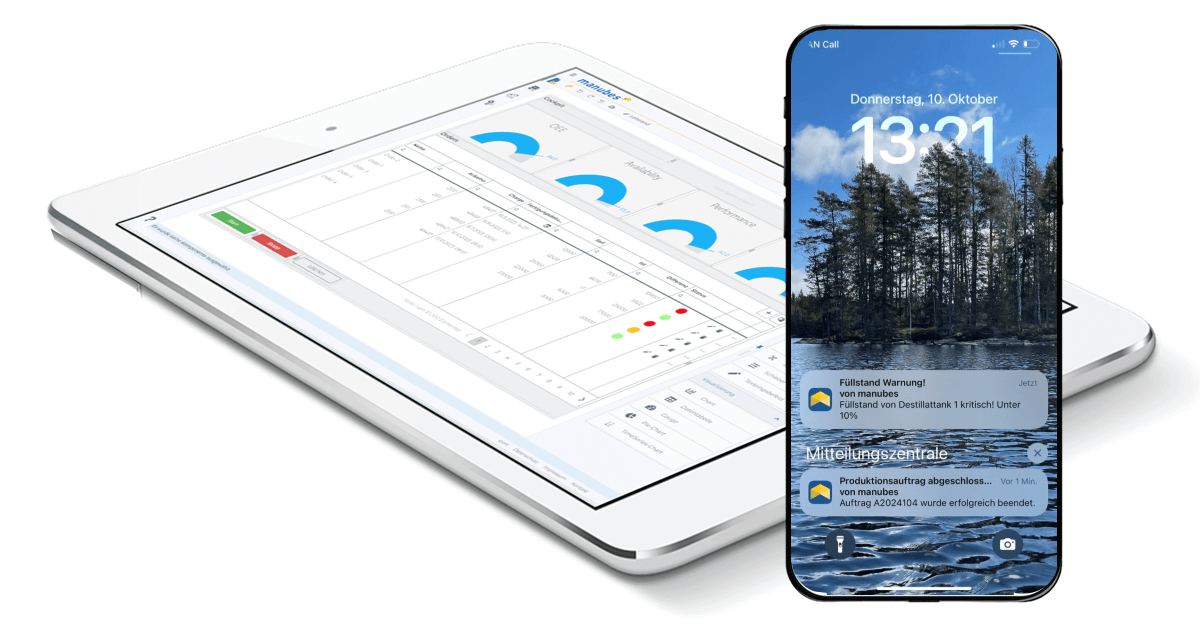
Providing real-time data from production planning, including the ERP system, creates cross-departmental transparency and helps prevent delays. Example: A manubes dashboard with order management and mobile push notifications.
Quality issues and rework
Defective parts need to be inspected, reworked or remanufactured. This not only increases the throughput time of the affected order, but can also delay subsequent orders if machines or personnel are occupied with rework.
Lack of transparency
Some manufacturers only notice increasing throughput times when delivery dates are already at risk. Without up-to-date data, it often remains unclear at which workstation orders are building up or why certain processes take longer than planned.
Optimizing throughput time
How can throughput time be reduced?
A short throughput time rarely results from a single measure. In most cases, several factors work together: Realistic production planning, stable material flows, short setup times and transparent processes. The key is to systematically identify and eliminate the causes of waiting and queue times.
Link production planning to current data
Optimized production planning ensures that orders are processed in a sensible sequence and that available capacities are used as evenly as possible. This reduces queues in front of individual machines and lowers the number of short-notice rescheduling activities.
Access to real-time production data helps companies continuously adapt planning to the actual situation on the shop floor. If a machine fails or materials are delayed, orders can be rescheduled at an early stage.
Comprehensive machine data collection and the integration of the shop floor/OT with the enterprise level/IT are essential. This ensures that other business areas have access to up-to-date information about the current production status.
Provide material on time
Missing material is one of the most common causes of delays.
Synchronization between logistics, shopfloor, and the ERP system ensures that current production and transport orders are immediately visible at the production line and in the warehouse.
Example:
Arrange workstations optimally
By optimizing the shopfloor layout and using high-performance transport systems, manufacturers can minimize transport times between stations.
Production cells, U-shaped lines or flow-oriented layout planning can help shorten transport routes and avoid unnecessary intermediate storage.
Shorten setup times
Possible measures for reducing setup times include:
- Standardized setup procedures
- Preparation of tools
- Moving individual setup steps outside machine downtime
- Combining orders (see below)
Combine orders
Several similar orders can be combined into one production lot, reducing the number of setup operations required. Due to delivery dates, material availability and individual customer requirements, combining orders is not always an option.
Eliminate bottlenecks
The greatest time losses often occur at individual overloaded workstations where orders build up.
Various production metrics and real-time data help make these bottlenecks visible. Companies can then take targeted measures, such as adding capacity, processing orders in parallel, or redistributing operations.
Avoid waiting and queue times
Workpieces often spend more time waiting than being processed.
Data such as order status, machine states, and process times can be used to determine how long individual process steps actually take and to improve planning.
Regular review
When metrics such as throughput time are calculated and reviewed continuously, for example as part of real-time production monitoring and in daily or weekly production reports, companies can identify fluctuations or compare performance across different areas.
This makes trends and improvement potential visible immediately. The more detailed the data collected on downtime, material shortages, and other events, the more accurately companies can identify the causes of excessive throughput times and improve them over the long term.
Shorten throughput times through greater transparency
With manubes, manufacturers are able to collect and visualize production data from different sources on a central platform. Create your own dashboards, workflow automations and end user applications to optimize existing processes and ensure transparency between shifts, teams and departments.
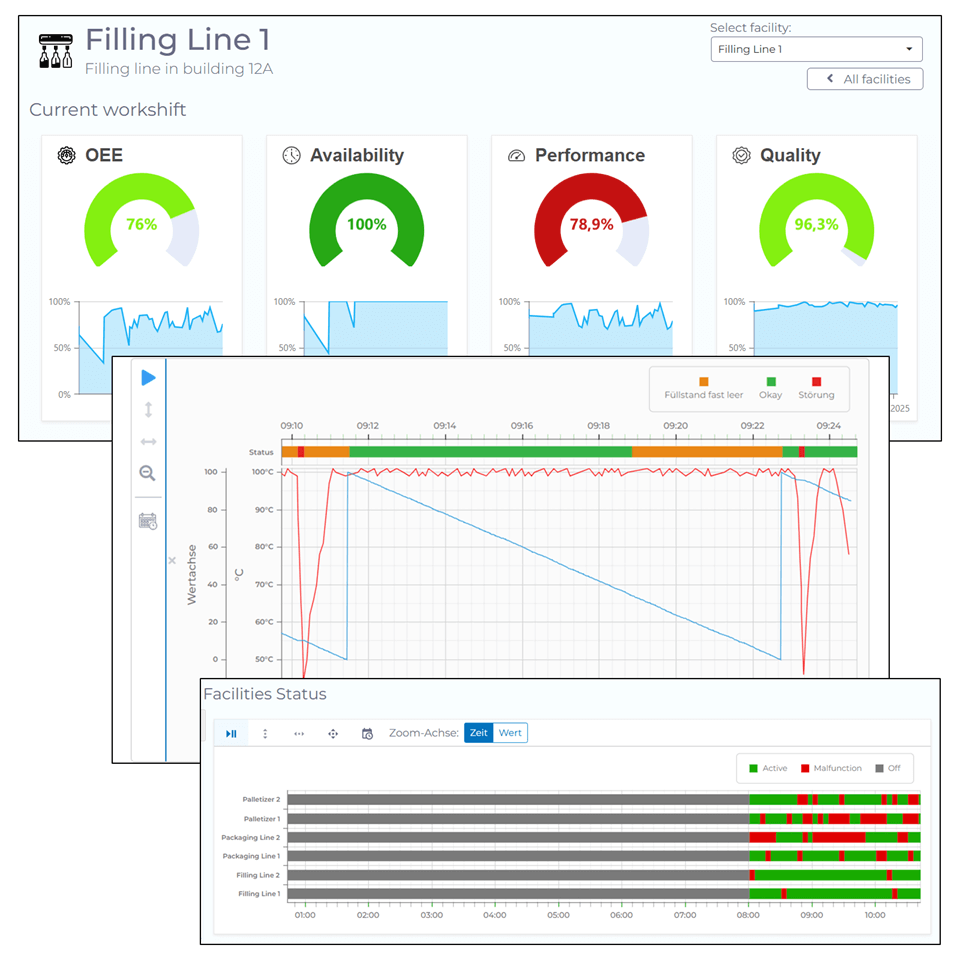
Mobile
Production Dashboards
Visualize machine data, operating data and KPIs with custom real-time dashboards that can be displayed anywhere and on any device. Monitor machines, inventories, and order progress to detect problems and bottlenecks immediately and prevent negative impacts on throughput time.
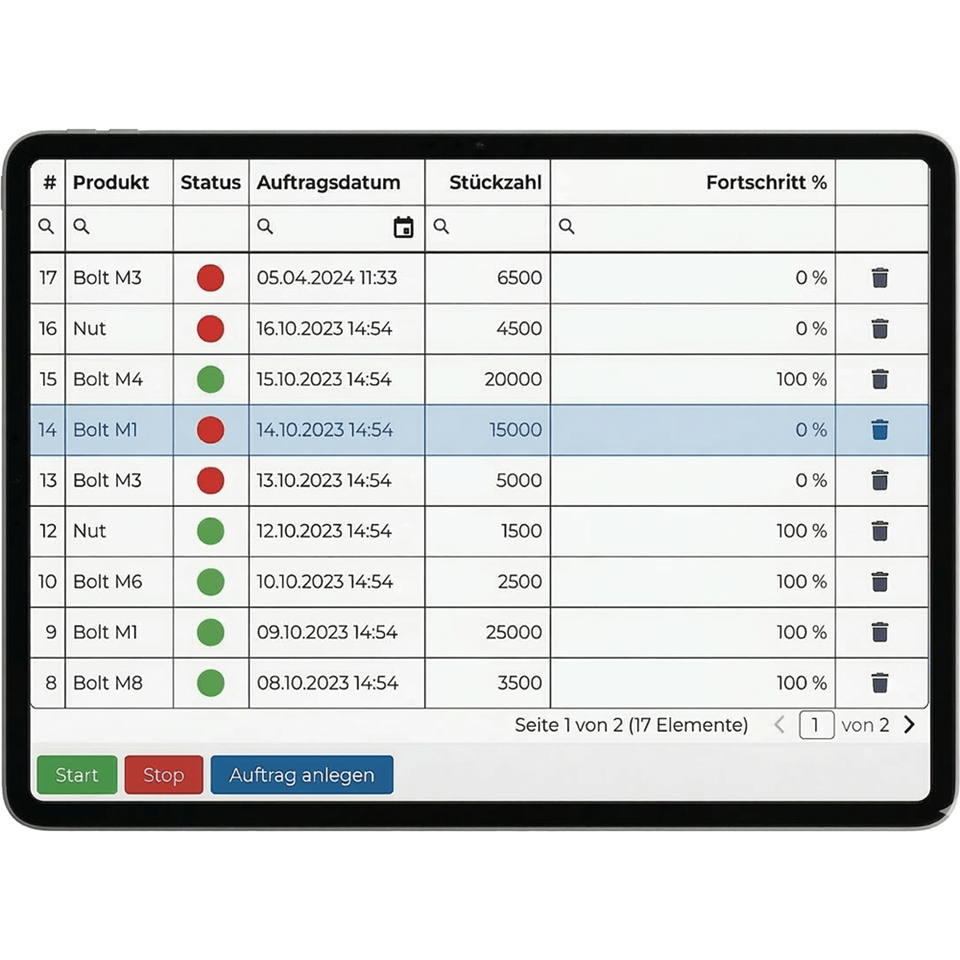
Interactive
Order GUIs
Create mobile interfaces for shopfloor teams that display the current status of production orders and transport orders from the ERP system. Users can submit updates, which are synchronized immediately in the background. Avoid delays caused by missing information that can affect throughput time.
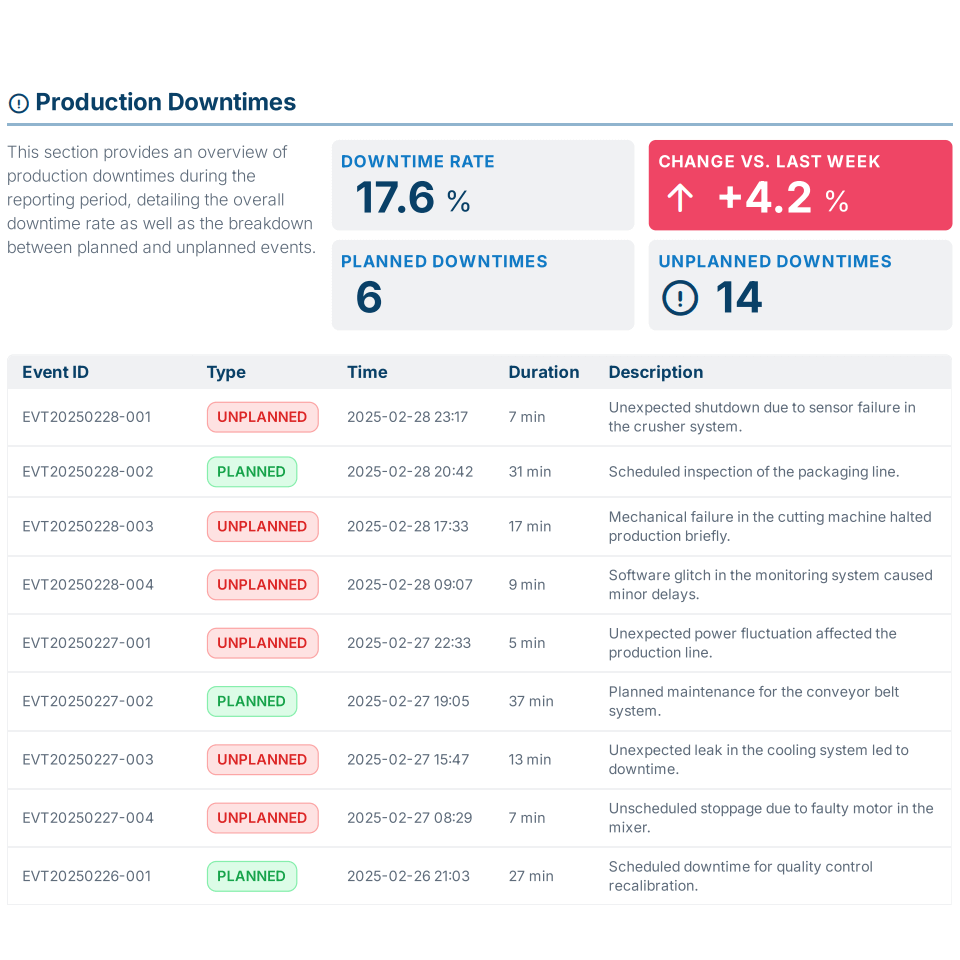
Automated
Reporting
manubes automates reporting, saves time and provides more up-to-date data. Create custom report templates using drag-and-drop and link elements to real-time data sources. Generate production reports with one click, analyze KPI trends and optimize throughput times based on data.
FAQ
Frequently asked questions about throughput time
- What is the difference between throughput time and lead time?
- What is the difference between throughput time and cycle time?
- What is the difference between throughput time and takt time?
- What are common mistakes when interpreting throughput time?
- Which metrics should be considered together with throughput time?
- Which measures reduce throughput time the fastest?
What is the difference between throughput time and lead time?
Throughput time describes how long an order or workpiece actually takes to pass through a defined process, typically from the start of production to completion.
By contrast, lead time usually describes the total time required or available to fulfill an order or requirement, from the initial trigger to the agreed result or delivery date. Depending on the context, this may include planning, material procurement, approvals, waiting times, production and delivery.
A clear distinction is important because both terms can be used differently depending on the company.
What is the difference between throughput time and cycle time?
Throughput time covers the total period in which an order passes through the production process, including processing, setup, transport, waiting, queue time and inspection. By contrast, cycle time usually measures the processing time for a single product at one station. Whether setup times are included depends on the company’s definition.
What is the difference between throughput time and takt time?
Throughput time shows how long an order actually takes to pass through production. Takt time indicates the time interval at which a product would need to be completed in order to meet demand. It is usually calculated based on available production time and the required quantity. While throughput time describes an actual process duration, takt time is a target value for production control.
What are common mistakes when interpreting throughput time?
A common mistake is to equate throughput time with pure processing time. In many production environments, the biggest time losses are caused by waiting time, queue time, transport time, setup time and time for approvals or rework.
Looking only at averages without considering variation and outliers can lead to individual bottlenecks or unstable processes remaining hidden.
Comparisons of throughput times between areas or products are only meaningful if the start and end points of the measurement are defined consistently.
Which metrics should be considered together with throughput time?
Because throughput time covers the entire production process, it is related to many other production metrics.
Examples:
- Delivery reliability shows how changes in throughput time affect the reliability of delivery dates and quantities.
- OEE evaluates the availability, performance and quality output of individual machines or systems and makes productivity losses visible that can also affect throughput time. It helps identify bottlenecks.
- The reject rate / scrap rate is important because defective parts or required rework can delay orders and significantly increase actual throughput time.
Which measures reduce throughput time the fastest?
The fastest way to optimize throughput time are often measures that reduce long waiting and queue times. These include eliminating bottlenecks, improving material availability, shortening setup times and reducing work-in-process inventory. In practice, manufacturers should first analyze at which stations orders remain idle the longest, as this is usually where the greatest short-term improvement potential lies.
Try manubes for free
Test the different manubes features in your personal cloud environment.

